5 Factors Changing Consumer Behavior Across 5 Generations
Marketing experts reveal 5 factors that are changing consumer behavior across 5 generations, leading to shifts in spending habits and lifestyles that businesses must consider when developing products and services to meet the diverse needs of each generation.
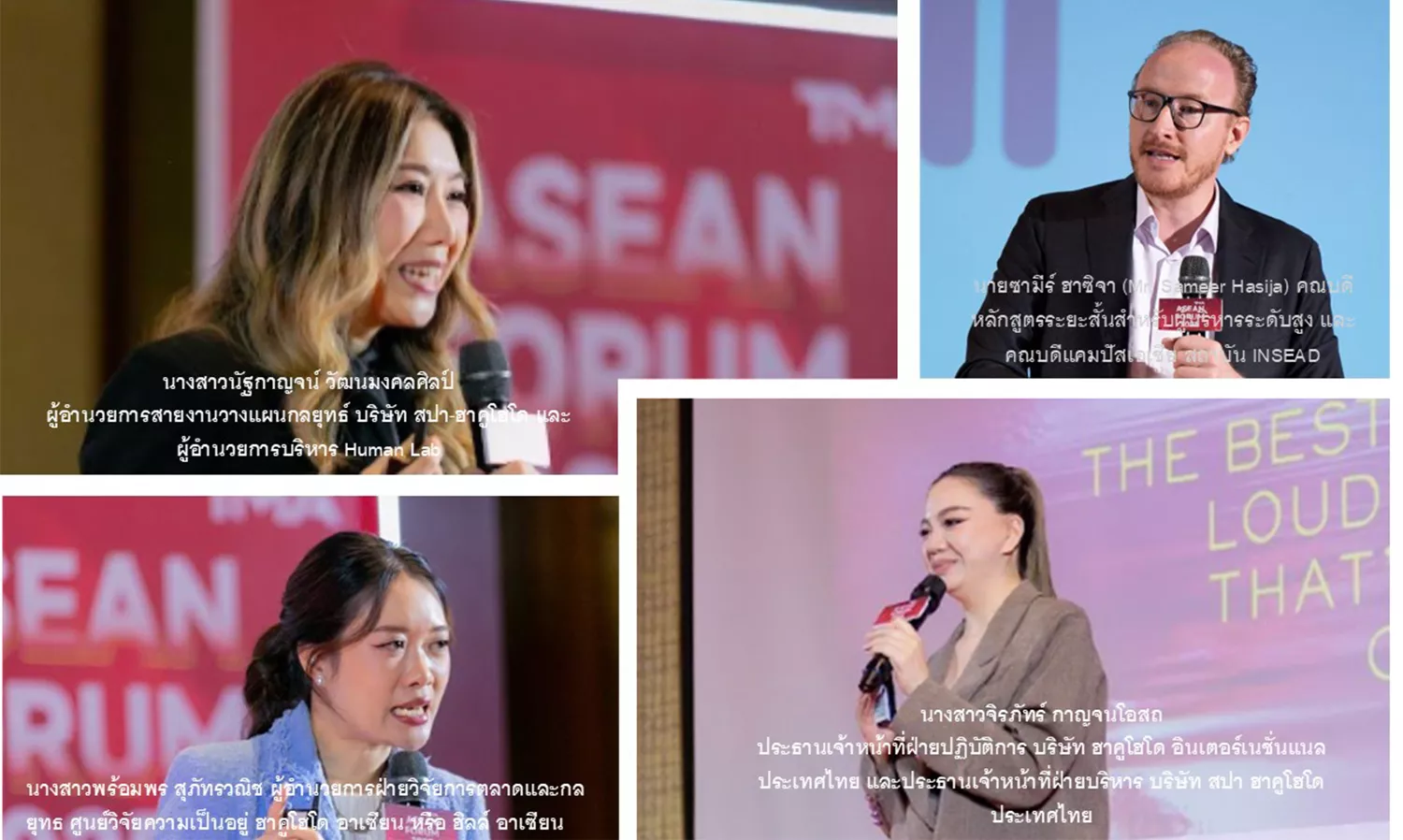
This insight was shared at the ASEAN FORUM 2025 seminar on "The New Consumers of ASEAN," organized by the Thai Management Association (TMA). The event featured regional marketing experts, including Mr. Sameer Hasija, Dean of the Executive Short Programs and Dean of the Asia Campus at INSEAD, who discussed the need for education to align with the behaviors of the new generation. He stated, "INSEAD is a business learning institution aimed at advancing education in Europe, and we have expanded our campuses globally, including in the Middle East, the United States, and ASEAN. Our research indicates that current education must prioritize technology and attitudes towards learning for application in the workplace. AI is increasingly influential in work, but collaboration with AI must be appropriate for the tasks at hand; it should be used wisely as a tool, not as a determinant of work direction. This is a factor influencing behavioral changes across all generations today," Mr. Hasija said.
Ms. Jirapat Kanjanohsath, Chief Operating Officer of Hakuhodo International Thailand and CEO of Spa Hakuhodo Thailand, outlined the 5 factors affecting consumer behavior across all generations:
- Economic changes characterized by volatility and uncertainty.
- Emphasis on lifestyle and the value of living.
- Shifts in lifestyle patterns and culture.
- Increased focus on hygiene and environmental concerns.
- Technological and digital transformations.
Regarding these 5 factors, Ms. Jirapat stated, "When analyzing current consumer behavior, we must consider multiple dimensions, unlike in the past. This is the foundation of Hakuhodo's philosophy, Sei-katsu-sha, which stems from the context of daily life. In branding and marketing today, we must understand consumer dimensions in different contexts. For example, when marketing, we cannot simply ask what food someone likes most; instead, we should ask what restaurant they prefer when dining with family versus when dining alone. Therefore, we must view consumers from all dimensions. Today, we believe there are many aspects that can drive ASEAN's future forward," Ms. Jirapat added.
"Currently, ASEAN has a population of nearly 700 million, about 10% of the world's population, serving as a driving force for the global economy. Statistics show that urban growth in ASEAN exceeds 50%, reflecting continuous growth. In ASEAN, countries like Thailand, Singapore, and Vietnam have slow population growth with low birth rates, while countries like Indonesia and the Philippines maintain balanced growth. Ultimately, ASEAN continues to thrive with a new generation emerging, whose lifestyles are changing, impacting other generations as well," she said.
Five Distinct Generations
Ms. Natkan Wattanamongkolsilp, Director of Strategic Planning at Spa Hakuhodo and Executive Director of Human Lab, discussed the changing behaviors of the 5 generations influenced by the aforementioned factors. She noted, "For the Baby Boomer generation, aged 60 and above, they face numerous changes. Their fears include becoming outdated, and they wish to leave a legacy. The changes have led this generation to differ from the past, where they felt reclusive, now pursuing their dreams with enthusiasm, transforming retirement into a time for 'Start Timeless Experimenters.' Age is no longer a limitation; many are returning to work, extending retirement age, and becoming content creators, with around 80,000 in Thailand today."
Meanwhile, those in Generation X, aged 44-59, often referred to as the Sandwich Generation, find themselves between their parents and children, bearing societal expectations as caregivers. This has led to a life that feels wrong for them. However, their behaviors have shifted; they are now prioritizing self-care, traveling with friends, and even solo trips, becoming 'The Daring Leapers,' breaking free from constraints and taking responsibility for their own well-being in a 'Now or Never' mindset.
Generation Y, aged 29-43, once burdened by societal expectations and fears of failure, has evolved into a diverse family unit that prioritizes self-care, entering an era of 'Alpha Female The Architect is Now,' where happiness cannot wait, and they define their own lives.
Generation Z, aged 18-28, are 'The Change Makers,' igniting the power to create a new world. They face pressures transitioning from employees to business owners, desiring immediate success while giving back to society. A staggering 76% of Gen Z aspire to own businesses and want to contribute positively to the world. They prefer environmentally friendly products, with 89% in Singapore prioritizing environmental issues. Humanity has changed; are you ready to move into the future with them? Our subconscious drives us to change our thinking and behaviors.
Ms. Promporn Suphatharwanit, Director of Marketing Research and Strategy at Hakuhodo Institute of Life and Living ASEAN (HILL ASEAN), spoke about Generation Alpha, born between 2010-2024 (ages 1-15), stating, "This group faces uncertainty on many levels. Their upbringing goes beyond basic needs; parents today are raising them to have survival skills in every situation. Generation Alpha is being developed to be resilient, open-minded, and adaptable to change, with a focus on multi-unique activities beyond academics, including sports, games, and music. We believe that 65% of this generation will work in jobs that currently do not exist. Surveys show that Alpha is interested in sports, arts, and finance. Parents must build strong trust with their children, keeping them in sight. 42% of this generation believes they influence their parents, and 90% identify family and friends as their primary influencers. Additionally, 77% prefer shopping in physical stores over online. "For this generation, they are the ACE Generation that can change the world."